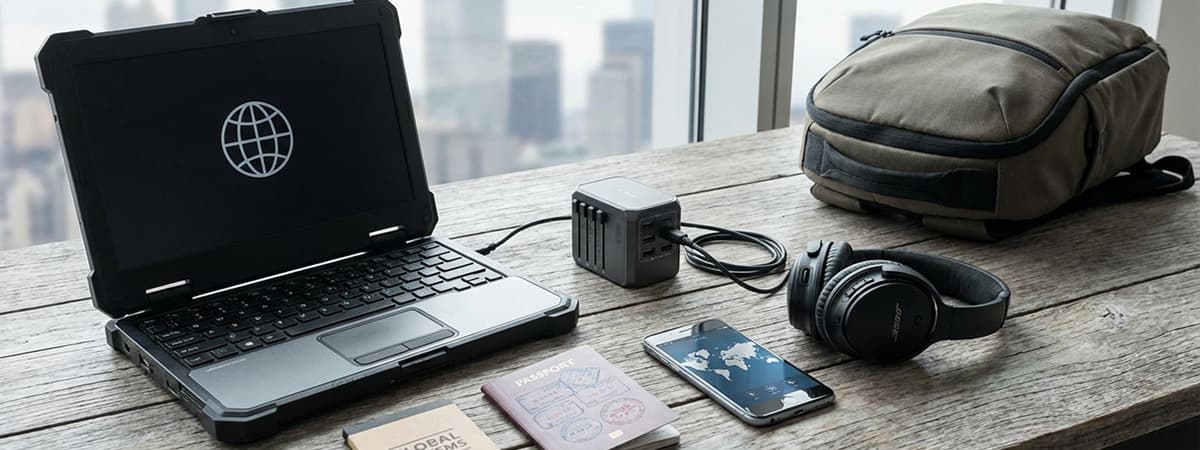
The Invisible Suitcase: Protecting Your Digital Identity While Traveling
Post Summary: Beyond physical luggage, your most valuable assets are digital. This guide examines the essential protocols for securing your data on public networks, managing financial privacy abroad, and ensuring your digital identity remains protected across borders.
In the modern era, a traveler’s vulnerability isn’t just about a lost wallet or a misplaced passport; it’s about the digital trail we leave behind. Every time we connect to an airport Wi-Fi, tap a contactless payment terminal, or log into a booking portal from a shared device, we expose our most sensitive information to potential risks.
As remote work and digital nomadism become the standard, the “invisible suitcase”—your collection of passwords, banking details, and identity documents—requires as much protection as your physical belongings. Mastering digital hygiene is no longer optional; it is a fundamental part of the 2026 travel experience.
1. The Public Wi-Fi Dilemma
The convenience of free internet in transit hubs is undeniable, but these networks are notoriously insecure. Cyber-threats often manifest through “man-in-the-middle” attacks where data sent over the air is intercepted.
- The VPN Requirement: Always route your traffic through an encrypted Virtual Private Network. This ensures that even if a network is compromised, your data remains unreadable.
- Disable Auto-Connect: Configure your devices to ask for permission before joining new networks to avoid “evil twin” hotspots designed to look like official airport Wi-Fi.
- Prioritize eSIM Data: Whenever possible, use your private cellular data via an eSIM instead of public hotspots for sensitive tasks like mobile banking.
2. Managing Financial Privacy Abroad
Physical credit cards are increasingly being replaced by digital wallets, but the risks have simply evolved. To keep your finances secure while moving between countries, consider these strategies:
- Virtual Disposable Cards: Use banking apps that allow you to generate single-use virtual cards for online bookings or suspicious local terminals. Once the transaction is complete, the card number is destroyed.
- Geographic Alerts: Notify your financial institutions of your travel dates to prevent unnecessary account freezes, but also enable “transaction alerts” to catch unauthorized activity in real-time.